那种认为我们的老牌政党已变得老态龙钟、不堪一击的观点,纯属无稽之谈。
有确凿证据表明,包括巴伦德拉・沙阿在内的这些未来领导人具有相当明显的右翼特质。
来源:《加德满都邮报》(The Kathmandu Post)2026年1月6日第4版
https://kathmandupost.com/columns/2026/01/06/the-old-and-the-new
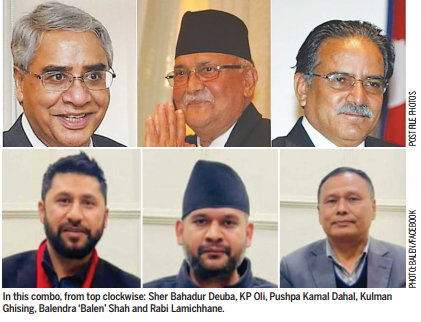
图中人物按从上至下顺时针方向依次为:尼泊尔大会党主席谢尔・巴哈杜尔・德乌帕(Sher Bahadur Deuba)、尼共(联合马列)主席KP・奥利(KP Oli)、尼泊尔共产党协调人普什帕・卡马尔・达哈尔(Pushpa Kamal Dahal,即普拉昌达Prachanda)、能源部长库尔曼・吉辛(Kulman Ghising)、加德满都市长巴伦德拉・“巴伦”・沙阿(Balendra ‘Balen’ Shah)、尼泊尔民族独立党主席拉比・拉米恰恩(Rabi Lamichhane)。
作者简介:
米特拉・帕里亚尔(Mitra Pariyar)毕业于牛津大学(Oxford University),是一名达利特人权益活动家(Dalit rights activist),曾在澳大利亚和英国的多所大学任职。他隶属于尼泊尔共产党(Nepali Communist Party)。
发布时间: 2026 年 1 月 6 日
更新时间: 2026 年 1 月 6 日 07:10
随着选举日益临近,所有人都在思考政党的两极分化及其可能产生的结果。尤其是近期三位民粹主义人物 —— 巴伦德拉・沙阿、库尔曼・吉辛与拉比・拉米恰恩的结盟,进一步引发了社交媒体上的热议与争论。许多人开始质疑老牌资深领导人及其政党的未来。他们真的如不少人所认为的那样,正处于消亡的边缘吗?
我想敦促民众,首先,停止将自身的决策权外包给社交媒体应用,而是仔细考量各政党的意识形态、历史沿革、地缘政治格局以及基层实际情况。倘若他们不这样做,国家未来可能面临更大的危险。在这一关键时期,我们必须保持明智与审慎。
老牌势力
几乎每个尼泊尔人都经常食用扁豆米饭套餐(dal bhat)。[1]新收的扁豆煮成汤味道更鲜美,但陈米煮出来的饭口感更佳 —— 新收割的稻米甚至很难煮透。众所周知,威士忌年份越久,口感越醇厚。换句话说,并非所有新事物都是好的,也并非所有旧事物都是坏的。政党亦是如此。资深政客或许会因年事已高而能力衰退,这是自然规律,但这一规律未必适用于政治组织的生命力。
试以美国政治为例。在数百个注册政党中,仅有两党占据主流地位。现处于在野地位的民主党(Democratic Party)成立于 197 年前,是世界上现存最古老的政党之一;执政党共和党(Republican Party)的历史也达 171 年。同样,在英国,保守党(Conservative Party)和工党(Labour Party)分别拥有 182 年和 125 年的历史。在中国,中国共产党(Communist Party of China)成立于 1921 年;在印度,印度国大党(Indian National Congress)则于 1885 年创立。
由此可见,那种认为我国老牌政党已过于老旧、孱弱且不适应时代需求的观点,纯属无稽之谈。它们绝非强弩之末。当下流行的 “新旧二元对立” 论调既荒谬又具有误导性。更何况,我国政党的历史本就不算悠久。尼泊尔大会党(Nepali Congress)成立于 1950 年,尼泊尔共产党(联合马列)(Communist Party of Nepal (United Marxist-Leninist),CPN-UML)则于 1991 年组建 —— 该党是 1949 年普什帕・拉尔・施雷斯塔(Pushpa Lal Shrestha)在印度加尔各答发起的共产主义运动的主要分支。[2]
我完全认同:近年来,这些政党的表现确实未尽如人意。它们在推翻专制的拉纳政权(Rana regime)[3]和沙阿王朝(Shah dynasty)[4]的过程中发挥了关键作用,但在创造经济繁荣与社会平等方面,却未能取得同等的成功。相反,它们始终被腐败、任人唯亲、种姓制度以及诸多其他问题所困扰。因此,民众对这些政党的愤怒与失望之情,是完全可以理解的。
新兴力量
借势Z世代抗议活动的浪潮,尼泊尔政坛涌现出一批年轻政治人物。例如,民族独立党(Rastriya Swatantra Party, RSP)主席拉比・拉米恰恩(Rabi Lamichhane),在联合新兴政党及其领导人的过程中发挥了关键作用。民族独立党已将广受欢迎的加德满都市长巴伦德拉・沙阿(Balendra Shah)推为未来总理人选。拉米恰恩、沙阿与吉辛三人承诺,将在十年内遏制腐败并推动国家经济发展。我在此祝他们一切顺利。但这些自封的 “进步与繁荣捍卫者”,至今尚未提出实现其目标的可行计划与战略。令人失望的是,这些未来领导人的愿景与意识形态也未得到清晰阐述。尽管他们看似属于右翼阵营,民众仍不清楚他们在政治光谱中的确切定位。
更重要的是,与全球民粹主义者的通病一样,他们对国家核心问题的分析相当肤浅且流于表面。他们甚至不愿承认困扰我国社会的更深层次结构性问题。这些新领导人似乎对阶级与种姓问题视而不见。有确凿证据表明,包括巴伦德拉・沙阿在内的这些未来领导人具有相当明显的右翼特质。例如,沙阿市长对待加德满都街头小贩的强硬方式就足以证明这一点。那些在加德满都街头谋生的穷苦人,被像野兽一样驱赶。他们的贵重物品要么被扔到街上,要么被没收。有时,警方甚至会对这些小贩使用暴力。而市长并未制定任何措施来安置这些依靠街头经济生存的人。同样,以收集和处理垃圾为生的人也被迫失业。更不用说那些居住在加德满都肮脏恶臭的河流与小溪岸边的无家可归者 ——失地无房群体(Sukumbasis)。[5]巴伦・沙阿试图强行将这些在当地居住了数十年的人赶出家园,却未对他们进行妥善安置。
在种姓不平等问题上,民族独立党三人组根本没有任何相关议程。他们似乎对占人口 13% 的达利特人(Dalits)的困境漠不关心。这些人即便在大城市,也过着屈辱且被排斥的生活。他们的竞选宣言甚至未提及种姓歧视与仇恨。
结论
历史潮流浩浩荡荡,非人力所能左右。在即将到来的选举中,新兴政党的新领导人似乎越来越有可能成为具有影响力的参与者。民族独立党的意识形态与组织架构尚未铺开,但它在社交媒体上已拥有相当高的人气。年轻人似乎已迫不及待,不愿再让老牌势力继续掌控国家。
然而,我必须郑重指出:绝不能放任这些缺乏政治经验、没有合适意识形态支撑的新兴势力自由发展。这可能会酿成一场灾难。尤其是阶级与种姓分化问题,其影响之深远,绝不能被掩盖忽视。
原文:The old and the new
The notion that our established parties have become too old and weak is ridiculous.
https://kathmandupost.com/columns/2026/01/06/the-old-and-the-new
In this combo, from top clockwise: Sher Bahadur Deuba, KP Oli, Pushpa Kamal Dahal, Kulman Ghising, Balendra ‘Balen’ Shah and Rabi Lamichhane.
Mitra Pariyar
Published at : January 6, 2026 Updated at : January 6, 2026 07:10
As the election is drawing closer, everyone is thinking about the polarisation of political parties and its possible outcomes. In particular, the recent alignment of three populist figures—Balendra Shah, Kulman Ghising and Rabi Lamichhane—has further excited the discussions and debates on social media. Many are questioning the future of the old and established leaders and their parties. Are they really on the verge of extinction, as many think?
I would urge people, first off, to stop outsourcing their decision-making to social media apps and give careful consideration to parties’ ideologies, histories, geopolitical situations and ground realities. If they don’t, the nation may face even greater dangers in the future. We must be wise and considerate in this critical period.
The old
Almost every Nepali eats dal bhat regularly. Lentil soup tastes better if the grain is new, but rice tastes better if it is an older stock. Recently harvested rice does not even cook well. And, as we all know, the older the whisky, the better it tastes. In other words, not everything new is good, and not everything old is bad. The same is true for political parties. Older politicians may become ineffective with ageing, which is natural, but that does not necessarily apply to the life of political organisations.
Consider, for example, American politics. Of the hundreds of registered parties, only two are prominent. Established 197 years ago, the Democratic Party, now in opposition, is one of the oldest functioning parties in the world. The party in power, the Republican Party, is 171 years old. Similarly, in the United Kingdom, the Conservative Party and the Labour Party are 182 and 125 years old, respectively. In China, the Chinese Communist Party was set up in 1921, and in India, the Indian National Congress was founded in 1885.
So, the notion that our established parties have become too old, weak and unfit for purpose is ridiculous. They are not done and dusted. The popular dichotomy between the old and the new is fallacious and misleading. In any case, our parties aren’t even that old. The Nepali Congress was founded in 1950, and the Communist Party of Nepal (United Marxist-Leninist) was founded in 1991. This was a major branch of the communist movement started by Pushpa Lal Shrestha in Calcutta, India, in 1949.
I agree: These parties haven’t functioned as they should have in recent years. They played a crucial role in toppling the autocratic Rana regime and Shah dynasty, but they haven’t been as successful in terms of creating economic prosperity and social equality. Instead, they have been dogged by corruption, nepotism, casteism and many other issues. The anger and frustration amongst the people towards these parties is therefore understandable.
The new
Riding on the bandwagon of the Gen Z protests, some younger figures have emerged in Nepali politics. For instance, Rabi Lamichhane, chair of the Rastriya Swatantra Party (RSP), has played a key role in bringing the newly established parties and their leaders together. The RSP has projected the popular mayor of Kathmandu, Balendra Shah, as the future prime minister. Lamichhane, Shah and Ghising have pledged to control corruption and boost the country’s economy within a decade. I wish them the best of luck with that. But the self-declared champions of progress and prosperity have yet to present feasible plans and strategies to achieve their goals. Frustratingly, these future leaders’ vision and ideology have not been clearly articulated. People do not know where they belong on the political spectrum, although they appear to be right-wing.
More importantly, as is common among the populists worldwide, their analysis of the country’s central problems is rather cheap and superficial. They do not even acknowledge the deeper structural issues plaguing our society. These new leaders seem blind to the issues of class and caste. There is some solid proof of the rather right-wing character of these future leaders, including Balendra Shah. For example, this is evident in the harsh manner in which Mayor Shah has treated street vendors in Kathmandu. Those poor souls making a living on Kathmandu streets have been chased away like wild animals. Their precious items were either thrown onto the streets or taken away. Sometimes violence was used against these vendors. And the mayor has not made any provisions for managing these people surviving in the street economy. Likewise, people who make their living by collecting and processing trash have been kept out of work. Not to mention the homeless people, sukumbasis, residing on the dirty and smelly banks of Kathmandu rivers and rivulets. Balen Shah tried to bulldoze these people out of their homes, where they have been living for decades, without relocating them properly.
In terms of caste inequality, the RSP trio have basically no agenda at all. They seem oblivious to the plight of 13 percent of the population, who have been identified as Dalits and live a life of humiliation and exclusion, even in major cities. Their manifesto does not even mention caste discrimination and hatred.
Conclusion
One cannot control the tide of history. It seems increasingly likely that the new leaders of new parties will emerge as influential players in the forthcoming elections. The RSP has yet to spread its ideologies and organisations, but it is quite popular on social media. The younger people seem impatient to keep the established forces in control.
I would strongly caution, however, against giving a free rein to these new players without political experience and suitable ideology. It could be a disaster. Especially, the issues of class and caste divisions are too large to be thrown under the carpet.
Mitra Pariyar
A graduate of Oxford University, Pariyar is a Dalit rights activist who has worked in universities in Australia and England. Pariyar is affiliated with the Nepali Communist Party.
[1] 扁豆米饭套餐(dal bhat):尼泊尔国民饮食,由扁豆汤(dal)和米饭(bhat)组成,是普通民众日常生活的核心。原文以 “新扁豆好,陈米好” 的饮食常识为喻,类比尼泊尔政坛的 “新旧之争”—— 新兴民粹力量并非完美,老牌政党也有其不可替代的价值。
[2] 普什帕・拉尔・施雷斯塔(Pushpa Lal Shrestha,1924年6月28日-1978年7月22日)是尼泊尔共产主义运动的奠基人,被誉为“尼泊尔共产主义之父”。 1949年4月5日,他把《共产党宣言》首次译成尼泊尔文并写长篇导言,指出尼泊尔必须建立共产党以推翻封建统治。1949年4月22日(列宁诞辰),他在加尔各答与4位同志正式组建尼泊尔共产党,出任首任总书记。
[3] 拉纳政权(Rana regime)是指1846年至1951年间由拉纳家族世袭实际统治尼泊尔的独裁统治。1846年9月15日,尼泊尔宫廷权臣忠格·巴哈杜尔·拉纳(Jung Bahadur Rana)通过血腥的“科特庭院屠杀”(Kot Massacre)铲除政敌,自封为首相(Maharaja),开创拉纳家族世袭首相制度,国王沦为傀儡。1951年2月18日,尼泊尔国王特里布文(Tribhuvan)在印度支持下,联合尼泊尔大会党(Nepali Congress)成功推翻拉纳家族长达104年的世袭专政,正式恢复王权,并宣布实行君主立宪制。2月18日后来被尼泊尔定为“民主日”(Democracy Day),以纪念民主制度的开端。
[4] 沙阿王朝(Shah Dynasty)是尼泊尔历史上最后一个君主制王朝,统治时间从1768年至2008年,共持续240年。该王朝由普里特维·纳拉扬·沙阿(Prithvi Narayan Shah)建立,其核心成就是首次统一尼泊尔,奠定了现代尼泊尔国家的疆域与民族认同基础。
[5] 失地无房群体(Sukumbasis),在当代尼泊尔语境中,Sukumbasis 是指那些世代居住在公共土地(如河岸、森林边缘、政府闲置地、保护区周边等)上,但从未获得合法土地所有权或使用权证明的贫困家庭。